Counting Heads, Not Calendars: Setting a Wheelie Wash Rhythm That Fits Your Home
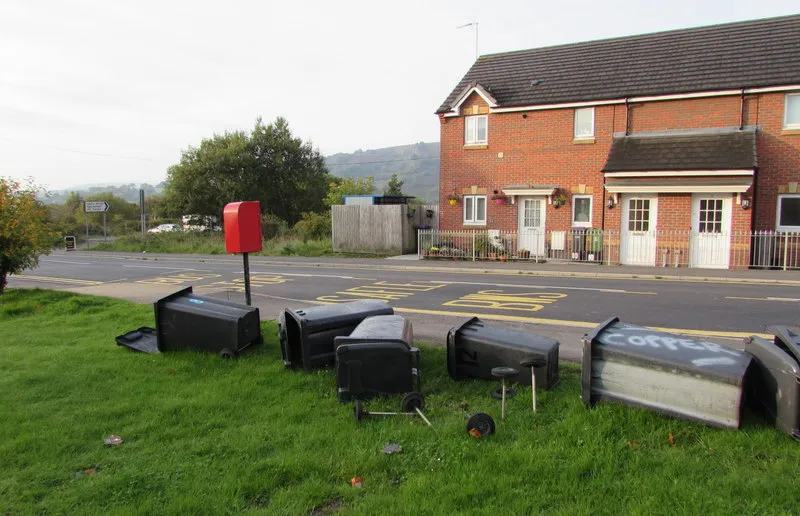
Photo: Jaggery , CC BY-SA 2.0, via Wikimedia Commons
Most wheelie bin advice starts with a tidy little rule: wash it monthly, or every few weeks, or whenever it starts to hum. That is fine as a starting point, but it ignores the obvious. A household of five with a fortnightly collection and a toddler in nappies is not living the same bin life as a couple in a flat with a weekly pickup and very little food waste. The right schedule is less about the calendar and more about what actually goes in the bin.
Start With the Bin, Not the Date
A wheelie bin is a container, but it is also a small ecosystem. Warm weather, food residue, nappy sacks, pet waste and the length of time between collections all feed into how quickly it turns from “a bit whiffy” to “please don’t stand near that”. In the UK, fortnightly collections are common, and they can stretch a bin’s patience — especially in summer or after a bank holiday.
The useful question is not “how often does a bin need washing?” but “how much pressure is this bin under?” Four things matter most:
- How many people use it. More people means more packaging, more food scraps and more of everything that starts to smell.
- How often it is emptied. A weekly collection gives a bin less time to stew than a fortnightly one.
- What goes in it. Food waste, nappies, pet waste and unrinsed containers raise the pressure. Dry cardboard and clean plastic lower it.
- Where it sits. A sunny, sheltered bin bay or a warm utility area will get smellier faster than a shaded, airy spot.
A Plain-English Household Calendar
Use this as a starting rhythm, then adjust. It assumes a standard UK wheelie bin, normal household rubbish, and a bin that is kept reasonably clean between washes.
| Household size | Fortnightly collection | Weekly collection | Notes |
|---|---|---|---|
| 1–2 people | Every 6–8 weeks | Every 8–10 weeks | Wash sooner if food waste or pet waste is heavy |
| 3–4 people | Every 4–6 weeks | Every 6–8 weeks | Most UK homes land around every 4–6 weeks in warmer months |
| 5–6 people | Every 3–4 weeks | Every 4–6 weeks | Consider a mid-summer extra wash |
| 6+ people or nappies | Every 2–3 weeks | Every 3–4 weeks | Nappies and warm weather shorten the gap |
That table is deliberately not fussy. It gives you a sensible baseline, not a rigid law. A one-person household that cooks most nights and puts food waste in the general bin may need a wash sooner than a couple who barely fill theirs. A large family that rinses containers and keeps food waste separate may stretch their bin further than expected.
Signs You Are Washing Too Little
A bin does not need to be visibly filthy before it needs attention. Watch for these clues:
- The smell survives collection day. If the bin still smells after it has been emptied, the residue is in the plastic, not just the rubbish.
- Flies gather around the lid or handles. That is a sign of organic matter hanging around in the crevices.
- There is a dark film or sticky patch at the bottom. This is where liquid waste collects, and it is exactly the sort of thing a quick rinse misses.
- Maggots appear in warm spells. This is not a moral failing; it is a sign the bin is holding onto food residue.
- The bin smells worse than the rubbish inside it. At that point, the bin itself is the problem.
If any of those sound familiar, bring the next wash forward rather than waiting for your scheduled date.
Signs You Are Washing Too Often
There is a limit to how much good a wash does. If you are cleaning a nearly empty, fairly dry bin every fortnight, you are probably using water, time and money for very little benefit. You may also be creating a cycle where the bin never quite dries out, which is not ideal either.
A few signs you can ease off:
- The bin looks and smells fine between washes.
- You are washing mainly because the date came around, not because the bin needs it.
- The bin is usually dry inside and holds mostly clean packaging.
- You are paying for extra washes in winter when the bin is half empty and the weather is cold.
Water is a resource, and so is your time. A wash should be a response to real pressure, not a nervous habit.
Adjusting Through the Year
A good bin schedule changes with the seasons. In the UK, that usually means a shorter gap from late spring to early autumn, and a longer one in the cooler months.
- Summer: Bring washes forward by a week or two. Warm weather speeds up smells and fly activity. If you have nappies or pet waste in the bin, be more generous with frequency.
- Winter: You can often stretch the gap, provided the bin is not holding wet food waste or nappies. Cold weather slows things down, though it does not stop them entirely.
- After Christmas and bank holidays: Collections shift, bins sit longer, and cardboard piles up. A wash after the festive period is often more useful than one in mid-December.
- Moving house: If you are handing over a bin, clean it regardless of the calendar. The next household will thank you.
A Simple Way to Find Your Rhythm
Pick a baseline from the table, then run a four-week trial. After each collection, note three things: how the bin smells, whether there is residue at the bottom, and whether flies are hanging around. If all three are fine, you can probably stretch the gap. If any are off, shorten it.
For most UK households, the sweet spot is not weekly washing and not annual neglect. It is a wash every four to six weeks in the warmer half of the year, adjusted for how many people are filling the bin and what they are putting in it. Count heads, watch the weather, and let the bin tell you when it needs attention. That is a schedule that saves water, money and a fair amount of holding-your-breath at the kerb.